How to Design AI Agents From Quote to Policy
The strongest insurance journeys do not stop at quote generation. They keep context alive across eligibility, document collection, underwriting checks, payment, and human approval.

The bottleneck is the handoff, not the screen
Insurance teams rarely lose time inside a single step. They lose time between steps: after the quote is shown, before the plate is verified, while waiting for a document, or when a payment-ready customer is pushed into a manual callback. What looks like a simple quote flow is actually a chain of operational decisions with fragile handoffs.
That is why agentic design matters. A good agentic workflow does not behave like a long scripted form. It recognizes intent, knows what state already exists, decides which specialist action comes next, and carries the interaction forward without making the customer or operator restart from zero.
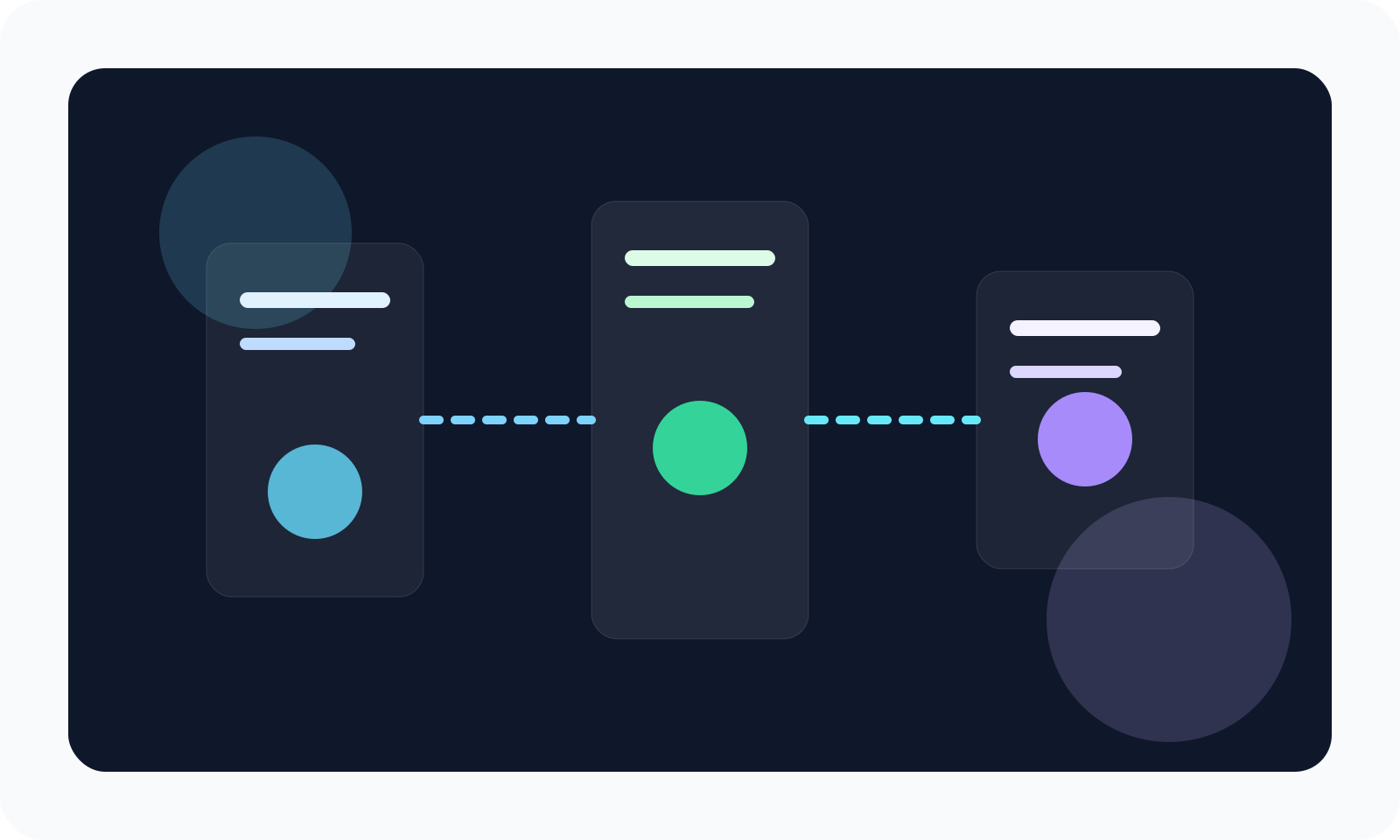
“The real win is not a faster quote. It is removing the silent waiting areas between first intent and issued policy.”
Build the workflow around state, not prompts
The most resilient flows separate four concerns. First, intent routing: is the user exploring, comparing, confirming, or ready to buy? Second, operational memory: what has already been verified and what is still missing? Third, insurer connectivity: which carriers, prices, exclusions, installment options, and document requirements are current right now? Fourth, commitment logic: what can safely move forward automatically, and what still needs human approval or exception handling?
This separation matters because customer behavior is messy. Someone may start on the website, continue on WhatsApp, upload an old policy, ask about an exclusion, disappear for two hours, and come back ready to pay. If state is explicit, the journey continues smoothly. If state is hidden inside one narrow script, the experience collapses.
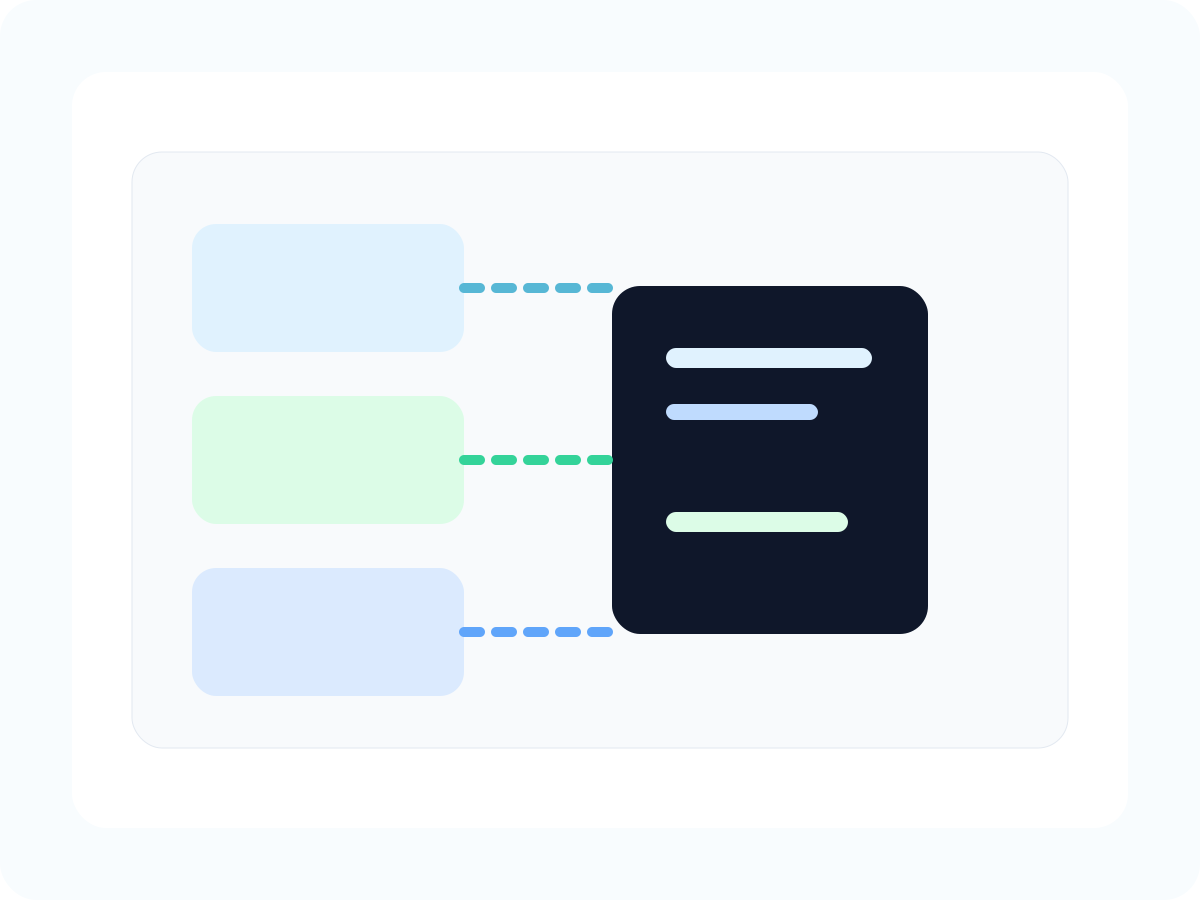
Design the journey as a sequence of decisions
The most effective quote-to-policy experiences do not try to sound clever at every turn. They focus on decision quality. Can the system tell the customer which information is missing, why it matters, and what the next best action is? Can it surface freshness, confidence, and differences between offers without flooding the conversation? Can it preserve continuity when a human steps in?
For insurance, this is where AI stops being a novelty and starts becoming infrastructure. A mature flow should be able to draft clarifications, request the right evidence, compare offers in plain language, and only escalate when the risk or ambiguity justifies it. That creates a calmer customer experience and a lower-friction operating model for the team behind it.
What matters most
Design around handoffs and approval points, not only around UI screens.
Keep routing, memory, insurer connectivity, and commitment logic as separate responsibilities.
Expose freshness, status, and missing inputs clearly enough that customers and operators stay oriented.
Treat payment as the result of good orchestration, not as a detached checkout bolted on at the end.